I'm a student at UCLA studying Molecular, Cell and Developmental Biology. Currently, I spend most of my time researching AI protein design and building in healthcare. Outside of that, I enjoy calisthenics and graphic design.
We're a student-run organization at UCLA to increase access to musculoskeletal care for underserved populations. We've since partnered with The Midnight Mission, a 501(c)(3) nonprofit, to provide free fitness and stretching classes at their Skid Row facility for former inmates, and individuals recovering from homelessness and addiction. Additionally, we participate in community health fairs, educating participants on posture, injury prevention, and maintaining musculoskeletal health.
2024.12 – 2025.09Cogenesis, Inc.
Cogenesis, Inc.
Built a suite of computational tools for stem cell researchers. 1) a stem cell fate prediction platform starting with blood stem cells, collaborating with a lab from USC's Keck School of Medicine to develop classification models that distinguish long-term HSCs from short-term HSCs for optimizing blood transplant success. 2) AI-powered cell and organoid microscopy image analysis. We were accepted into Founders Inc's Off Season program (1 of 50 out of 1,600+ applicants) and received non-dilutive funding from Startup UCLA.
DATEDESCRIPTION
2024.02 – 2025.09Intern @ Dee Sport Orthopedics
Intern @ Dee Sport Orthopedics
I worked as a medical assistant at an orthopedic / sports medicine clinic, and got to learn everything from direct patient care to the day-to-day operations of a private practice.
2024.02 – 2024.09Volunteer @ Cedars Sinai Medical Center
Volunteer @ Cedars Sinai Medical Center
I volunteered at the Transplant and Orthopedic department at Cedars Sinai Beverly Hills as part of their Transforming Care at the Bedside Program. I provided companionship and delivered food to patients, while working on an internal data science project auditing the transplant unit's nurses' compliance to protocols for preventing hospital acquired injuries.
Throughout the past several years, I've shadowed a diverse range of healthcare providers, including surgeons in orthopedics, gastroenterology, plastics, spine, and cardiac surgery, as well as internal medicine physicians, and nurse practitioners.
I occasionally write about interesting deep-tech startups. My articles are published under Unicorner, and read by 60k+ subscribers.
2026.02 – PresentEngineering AI-Designed Protein Binders for Neurodegeneration
Engineering AI-Designed Protein Therapeutics for Neurodegeneration @ The Jason Zhang Lab - UCLA
Co-leading development of conformation specific binders to alpha-synuclein to help diagnose and treat Multiple System Atrophy. Awarded a 25k grant by the Biswas Family Foundation.
Building Genetic Scorecards for iPSC derived Hematopoietic Stem Cells @ The Mikkola Lab - UCLA
Cord blood is the gold standard for blood stem cell transplants, but is inherently limited in supply because of its source. To help develop an off-the-shelf HSC, I built computational genetic scorecards that compared the maturation of iPSC-derived HSCs with mature and nascent fetal HSCs, performing scRNA-seq across 20+ datasets from fetal liver, bone marrow, and cord blood.
2023.06 – 2023.08Engineering Plasmids with Mucin Protein to Modify Cell Adhesion
Engineering Plasmids with Mucin Protein to Modify Cell Adhesion @ The Morsut Lab - USC
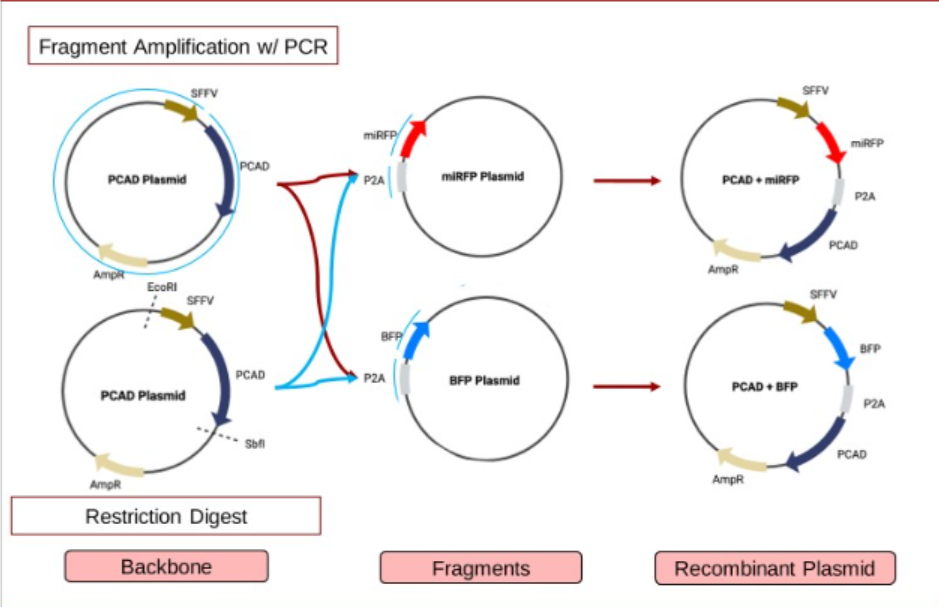
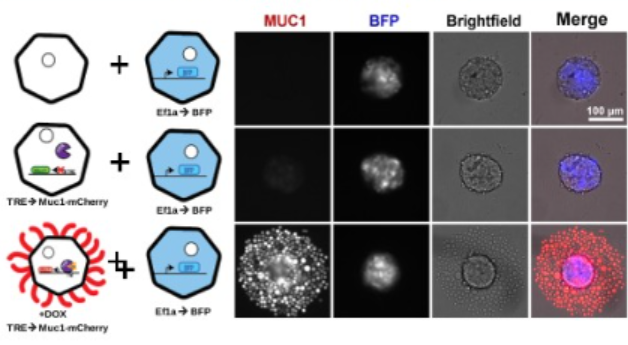
Mucin proteins are heavily glycosylated macromolecules that can modulate cell-cell and cell-matrix adhesion through their gel-forming properties and steric hindrance effects. I designed and engineered fluorescent bacterial plasmids encoding mucin proteins which were then transfected into mammalian cells.
2021.06 – 2021.08Simulating Tissue Morphogenesis
Simulating Tissue Morphogenesis @ The Morsut Lab
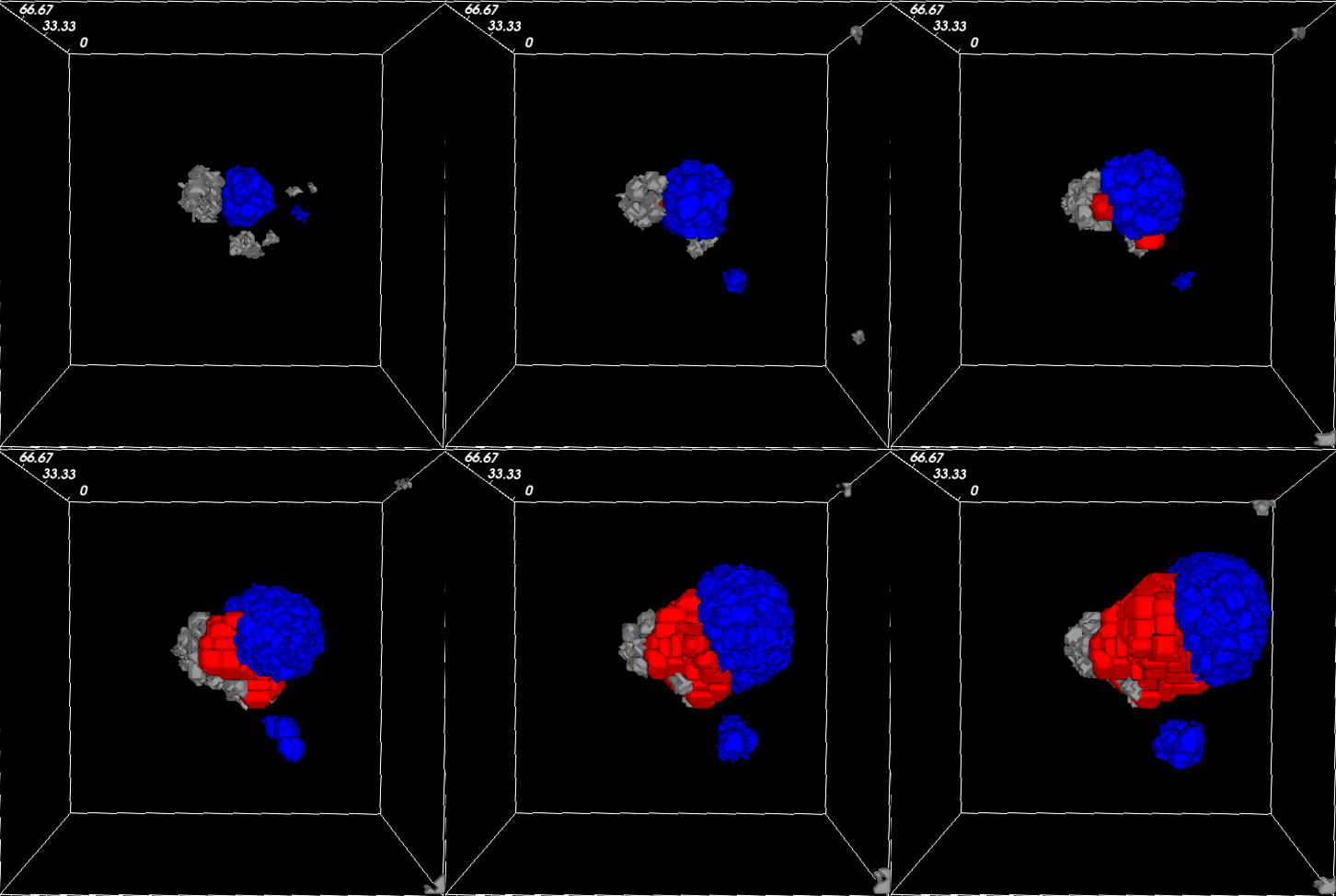
A critical challenge in tissue engineering is controlling the spatial organization and morphogenesis of multicellular structures. Using Python and CompuCell3D, I conducted in silico sensitivity analysis by systematically varying parameters including cell type conversion thresholds, cell motility, cell-cell adhesion strengths, and cell-to-medium adhesion coefficients. This analysis identified critical design modules for axial elongation and contributed to our bioRxiv preprint on programming mammalian cell aggregate elongation with synthetic gene circuits.
Recombinant Taq polymerase offers cost-effective alternatives to its commercially available variants, but requires optimization for reliable performance. To develop a scalable production system, I optimized expression and lysis protocols and benchmarked our crude extract against commercial standards. Additionally, I ran biochemical and metabolic assays to characterize a novel bacterial strain discovered during the optimization process.